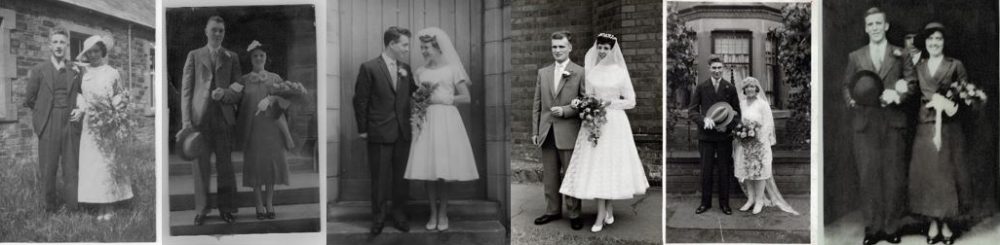
It was not uncommon to be married on either Christmas Day or Boxing Day in the 1800’s because these were days when working people were not expected to work. Christmas Day and Boxing Day were traditional holidays and are not, and never have been, bank holidays. For these, we need to thank the banker, Sir John Lubbock and his love of cricket.
In the 1800s most people worked six days a week and didn’t get paid when they didn’t work which, of course, most could ill afford. Christmas Day and Boxing Day were the two days when people officially didn’t have to work and also two days that they and their relatives could probably count on having to themselves. On top of that, churches often offered their services free or at reduced rates on Christmas.
Marriages were uncomplicated. Just 3 readings of the banns on 3 consecutive Sundays. Best clothes would be worn as they would be in any case for any Sunday. Dancing and making merry in the local barn and that was it. It was also a tradition that churches, certainly in London, offered free marriages and baptisms on Christmas Day and at Easter.
Christmas weddings certainly happened because people were poor and had little time away from their jobs. An 1865 article notes that a Lambeth clergyman had to commence his marriage ceremonies at 8 a.m. that Christmas in order to get through them all. And in 1899 in the East End, some 84 ceremonies were performed at one church. “They were mostly the costermonger class,” the article notes. “They were accompanied by large numbers of their friends, and crowds of people assembled outside the building and saluted each departing couple with showers of rice and confetti. The proceedings were enlivened with selections from mouth-organs.” There are stories of couples being married five at a time, and even a dozen at a time, “and it is satisfactory to know that the various husbands and wives paired off happily, without any ill results of this great ‘mix.’”